Planning a Canadian Motorcycle Adventure: Routes, Rental Choices, and Road Safety Tips
Introduction
Exploring Canada on a motorcycle gives travellers a different way to experience the country’s landscapes. You can follow winding mountain roads, discover quiet lakeside towns, travel along coastal highways, and stop at places that larger tour groups might pass by.
A rewarding journey starts with sensible decisions. Riders need to choose a suitable motorcycle, understand local licensing rules, prepare for changing weather, and plan fuel stops along unfamiliar roads. Rental agreements and insurance conditions also deserve attention before departure.
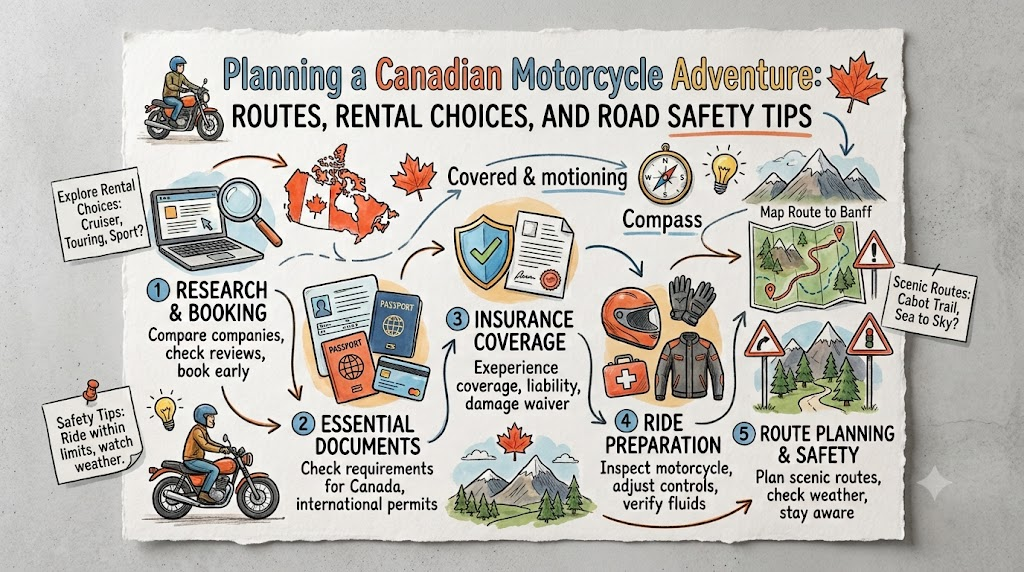
This guide covers the practical side of motorcycle touring in Canada. It explains how to build an itinerary, compare rental options, prepare your equipment, manage travel expenses, and handle common road challenges.
1. Build Your Trip Around Your Riding Experience
Before selecting a destination, decide how much riding you can comfortably manage. Your experience should influence the route, motorcycle type, and length of your journey.
Short Trips for Weekend Travellers
A weekend ride can offer a refreshing break without requiring a complicated itinerary. Choose a destination within a comfortable riding distance and leave time for meals, sightseeing, and rest.
Look for routes with reliable fuel access and suitable accommodation if you plan to stay overnight. Avoid packing too many stops into a short trip.
Multi-Day Motorcycle Touring
Longer journeys let you explore several regions and spend more time away from busy cities. However, they require careful planning for luggage, accommodation, maintenance, and daily riding distances.
Create a flexible schedule with enough time to handle traffic, roadwork, and weather delays. Book essential overnight stops when accommodation becomes limited.
Adventure Riding
Adventure travel may include paved highways and suitable unpaved roads. Riders should confirm that their motorcycle and rental agreement allow the surfaces they plan to use.
Gravel, loose stones, steep gradients, and muddy sections can challenge inexperienced riders. Choose a route that matches your abilities rather than attempting difficult terrain simply because it appears on a map.
2. Discover Scenic Motorcycle Routes Across Canada
Canada offers a wide range of destinations for motorcycle travellers. Each region has different road conditions, weather patterns, and service availability.
British Columbia’s Mountain and Coastal Roads
British Columbia combines coastal scenery with forests and mountain landscapes. The Sea-to-Sky Highway provides a scenic connection between the Vancouver area, Squamish, and Whistler.
Riders should prepare for curves, elevation changes, traffic, and shifting weather. During busy travel periods, allow additional time for congestion and stops.
Travellers planning a ride from Vancouver should consider the time needed to leave the city before reaching quieter roads. Check current conditions before departure.
Alberta’s Rocky Mountain Landscapes
Alberta offers access to mountain scenery, open countryside, and well-known touring destinations. The Icefields Parkway connects the Lake Louise area with Jasper and passes through striking mountain landscapes.
This journey requires preparation because mountain weather can change quickly. Wildlife may cross the road, and services remain limited along some sections.
Check highway advisories, park information, and fuel availability. Plan enough time for rest stops and avoid attempting demanding mountain roads without suitable experience.
Ontario’s Countryside Routes
Ontario offers opportunities to explore rural communities, lakeside destinations, and scenic roads around the Niagara region.
Riders starting near Toronto should account for urban traffic and parking restrictions. Consider leaving outside busy periods and choosing a route that allows time for sightseeing.
A shorter regional ride may provide a more enjoyable experience than trying to cover too much distance in one day.
Nova Scotia’s Coastal Touring
Nova Scotia attracts riders who enjoy coastal views, winding roads, and small communities. The Cabot Trail in Cape Breton is a notable destination for scenic motorcycle travel.
Fog, rain, and changing visibility can affect coastal riding. Check the forecast, confirm accommodation, and plan fuel stops before starting the journey.
3. Match Your Motorcycle to the Journey
The right motorcycle improves comfort and helps you manage the conditions along your route. Consider your experience, physical comfort, luggage needs, and expected daily distance.
| Motorcycle category | Typical use | Main consideration |
|---|---|---|
| Standard | Short trips and general riding | Storage and wind protection |
| Touring | Extended highway journeys | Size, weight, and handling |
| Adventure | Touring and suitable mixed surfaces | Road restrictions and rider experience |
| Sport | Responsive riding on paved roads | Riding position and luggage capacity |
| Cruiser | Relaxed rides and selected scenic routes | Ground clearance and motorcycle weight |
Do not select a motorcycle based only on its engine size or appearance. Check the seat height, weight, controls, riding position, and luggage capacity.
If you choose a touring motorcycle, consider whether you can handle it comfortably at low speeds. If you prefer an adventure model, confirm that it suits the roads you intend to ride.
4. Compare Motorcycle Rental Options Before Booking
Finding a rental involves more than choosing the lowest advertised price. You need a motorcycle that fits your itinerary and rental conditions that suit your plans.
Start by exploring available possibilities through MotoShare.ca. Check the specific vehicle, location, availability, and rental terms before making a booking decision.
What Should You Compare?
Review these details when evaluating rental options:
- Motorcycle model and specifications.
- Pickup and return arrangements.
- Minimum age and riding experience.
- Accepted driving licences.
- Insurance coverage and deductibles.
- Security deposits and payment methods.
- Mileage limits and fuel policies.
- Included protective equipment.
- Cancellation and late-return rules.
- Breakdown assistance and towing arrangements.
The total cost matters more than the daily rate alone. Taxes, insurance, optional equipment, and other charges can increase your final expenses.
Choose a Convenient Starting Point
Your pickup location can affect the amount of time you spend riding on your first day.
For example, travellers researching motorcycle rental options in Toronto should consider city traffic before heading toward quieter roads. Riders starting in Vancouver may want to plan around access to coastal and mountain routes. Those beginning in Calgary should consider the distance to their intended destinations in Alberta.
You can use MotoShare.ca to begin exploring rental possibilities. Confirm the availability of a suitable motorcycle and all relevant conditions before making travel arrangements.
5. Prepare Your Licence and Rental Documents
Canadian motorcycle licensing rules vary by province and territory. Rental providers may also apply additional conditions based on age, experience, or motorcycle type.
Confirm Your Licence Class
Check that your licence authorizes you to ride the motorcycle you intend to rent. Review the requirements that apply in the province or territory where you will ride.
International visitors should confirm whether their foreign licence qualifies and whether they need an International Driving Permit or an approved translation.
An International Driving Permit does not replace your original licence. Carry the required documents and check any restrictions that apply to your licence.
Check the Provider’s Eligibility Rules
Some rental providers require a minimum age or a specified period of riding experience. Certain motorcycle models may have additional restrictions.
Ask about these conditions before paying a deposit. If another person will ride the motorcycle, confirm that the agreement allows additional riders and that each rider qualifies.
Keep Your Documents Accessible
Carry your driving licence, rental agreement, insurance details, and emergency contact information.
Keep digital copies where practical, but do not rely solely on your phone. A separate backup can help if your device loses power or suffers damage.
6. Understand Insurance and Rental Expenses
Insurance terms can affect your financial responsibility during a trip. Never assume that personal vehicle insurance, credit card benefits, or travel insurance automatically covers motorcycle rentals.
Ask the provider to explain the available coverage before you sign the agreement.
Important questions include:
- Does the policy include third-party liability coverage?
- Is collision or damage protection available?
- What deductible applies?
- Does coverage include theft?
- Are towing and roadside assistance included?
- Do any road, passenger, or mileage restrictions apply?
- How should you report an accident or damage?
Read the policy terms carefully and contact your insurer if you need clarification.
Also review the deposit, fuel policy, return deadline, and possible additional charges. Understanding these conditions before departure can help you avoid unexpected expenses.
7. Create a Realistic Travel Schedule
A good itinerary balances riding with rest, meals, sightseeing, and overnight stops.
Estimate Your Daily Distance
Avoid planning your trip around distance alone. A winding mountain road may require much more time than a straight highway covering the same kilometres.
Start with a manageable first day, especially when renting an unfamiliar motorcycle. Increase your daily distance only when you understand your comfort level and the demands of the route.
Leave room for:
- Fuel and meal stops.
- Scenic viewpoints.
- Road construction.
- Traffic delays.
- Weather changes.
- Rest and unexpected problems.
Arriving safely matters more than completing every planned stop.
Research Fuel Availability
Some remote Canadian highways have long gaps between fuel stations. Identify reliable stops before entering isolated areas.
Check operating hours where possible and maintain enough fuel for reasonable detours. Download offline maps before travelling through areas with limited mobile coverage.
Organize Overnight Stops
Choose accommodation that fits your daily riding schedule. Consider secure parking arrangements, check-in times, food access, and nearby fuel stations.
During busy travel periods, accommodation may become limited in popular destinations. Reserve essential stops in advance and review cancellation conditions.
8. Pack for Canadian Weather and Road Conditions
Weather can change between cities, valleys, and mountain passes. Riders should prepare for more than the conditions they experience at the starting point.
Select Suitable Riding Gear
Wear a properly fitted helmet that meets applicable requirements. Add protective gloves, riding clothing, and suitable footwear.
A waterproof outer layer and warm clothing can help during rain and temperature changes. Mountain areas may feel cold even when nearby cities experience comfortable conditions.
If your rental includes protective equipment, check its condition and fit before departure.
Prepare a Practical Travel Kit
Consider packing these essentials:
- Driving licence and rental documents.
- Insurance and roadside assistance details.
- Phone, charging cable, and power bank.
- Offline navigation or a backup map.
- Water and snacks.
- Basic first-aid supplies.
- Weather-appropriate clothing.
- Emergency contact information.
- Flashlight and suitable visibility equipment.
Secure luggage properly and avoid overloading the motorcycle. Poorly balanced bags can affect handling, while loose straps may interfere with the controls or moving parts.
9. Complete a Pre-Ride Motorcycle Check
Before leaving the rental location, inspect the motorcycle and document its existing condition.
- Tyres: Look for visible damage, unusual wear, or obvious pressure problems.
- Brakes: Confirm normal operation.
- Lights: Check the headlight, brake light, indicators, and horn.
- Controls: Check the throttle, clutch, mirrors, and other controls.
- Leaks: Look for visible fluid leaks and report concerns.
- Drive system: Inspect the chain or other relevant components where applicable.
- Bodywork: Photograph existing scratches, dents, and other damage.
- Fuel: Record the starting level and confirm the return policy.
Ask the provider to explain unfamiliar controls and emergency procedures. If you notice a serious safety issue, do not start the trip until the provider addresses it.
10. Avoid These Common Touring Mistakes
Planning Too Many Stops
An overloaded itinerary can turn an enjoyable trip into a tiring schedule. Select a few important destinations and allow time to enjoy them.
Ignoring Weather Warnings
Rain, fog, cold temperatures, and strong winds can make riding more difficult. Check forecasts and current road conditions before departure.
If conditions exceed your experience, delay the journey or choose another route.
Choosing an Unfamiliar Motorcycle
A motorcycle that looks suitable may feel heavy or uncomfortable during actual riding. Consider its weight, seat height, handling, and luggage capacity before committing to a long trip.
Overlooking Rental Conditions
Mileage limits, fuel requirements, late returns, and damage procedures can affect your final cost. Read the agreement carefully and ask the provider to explain unclear terms.
Riding When Tired
Fatigue can reduce concentration and slow your reactions. Take regular breaks and stop when you feel tired, cold, or uncomfortable.
Do not let a planned arrival time pressure you into unsafe riding.
11. Essential Safety Considerations for Canadian Motorcycle Travel
Canadian roads present different challenges depending on the region and season.
Wildlife: Animals may cross rural highways, especially around dawn and dusk. Watch for warning signs and adjust your speed to suit visibility.
Road construction: Work zones may contain loose gravel, uneven surfaces, and temporary lane changes. Follow posted instructions and maintain enough space.
Mountain roads: Steep gradients, sharp curves, and changing temperatures demand careful control. Select routes that match your abilities.
Remote highways: Plan fuel stops, carry water, and prepare for limited mobile coverage. Tell someone your route and expected arrival time.
Local regulations: Helmet rules, licensing requirements, and other road regulations can vary. Check the applicable provincial or territorial requirements.
Breakdowns: Know how to contact the rental provider and arrange assistance. Move to a safe location when possible and avoid repairs beyond your ability.
Changing conditions: Reassess your plans when weather, road conditions, or fatigue create additional risks.
Frequently Asked Questions
1. When should I plan a motorcycle road trip in Canada?
Summer often provides longer daylight hours and suitable conditions for many routes. However, weather varies by region, and mountain areas can remain cold. Check current forecasts and road advisories before departure.
2. Can international visitors rent motorcycles in Canada?
International visitors may qualify if they meet local licensing requirements and the rental provider’s conditions. Confirm whether your foreign licence is accepted and whether additional documents are necessary.
3. Is an International Driving Permit enough to rent a motorcycle?
No. An International Driving Permit does not replace your original licence. Check whether your licence class and supporting documents meet the requirements where you plan to ride.
4. How much should I budget for motorcycle rental?
Costs vary by location, motorcycle model, season, rental duration, insurance, and provider. Compare the full price, including taxes, deposits, equipment, and additional charges.
5. Which motorcycle works best for a long-distance trip?
Touring motorcycles and some adventure motorcycles can suit longer journeys. Your ideal choice depends on your riding experience, comfort, luggage needs, and intended route.
6. Can a new rider travel long distances in Canada?
New riders should begin with shorter, familiar routes and a motorcycle they can control confidently. Longer trips require more experience and preparation for changing road conditions.
7. Should I reserve hotels before starting the trip?
Advance reservations can help in popular destinations and remote areas with limited accommodation. Flexible cancellation terms can also help if conditions disrupt your itinerary.
8. What should I check when collecting a rental motorcycle?
Inspect the tyres, brakes, lights, controls, and visible bodywork. Photograph existing damage, record the fuel level, and ask about emergency procedures.
9. Will rental insurance cover every repair?
Not necessarily. Coverage depends on the policy and rental agreement. Review exclusions, deductibles, theft protection, and liability coverage before riding.
10. What should I do if the motorcycle stops working?
Move to a safe location if possible and contact the rental provider. Follow its roadside assistance instructions and seek emergency help if the situation presents immediate danger.
11. Can I ride a rented motorcycle on unpaved roads?
Only if the rental agreement permits it and the motorcycle suits the surface. Gravel and loose stones can reduce traction and increase stopping distances.
12. How can I compare motorcycle rental providers?
Compare the motorcycle, total cost, licence requirements, insurance, deposit, mileage limits, equipment, pickup location, and return conditions. Confirm actual availability directly before booking.
Final Thoughts
A memorable Canadian motorcycle adventure depends on preparation, flexibility, and responsible riding. Choose a route that suits your experience, select a comfortable motorcycle, and allow enough time for rest, sightseeing, and unexpected delays.
Before setting off, review your licence requirements, insurance coverage, rental agreement, and motorcycle condition. Prepare for changing weather and plan fuel stops carefully, especially on remote highways.
To begin exploring rental possibilities, visit MotoShare.ca. Check the specific motorcycle, location, availability, and rental terms before making your arrangements.
With a sensible itinerary and the right preparation, you can explore Canada’s varied landscapes while making confident and informed decisions throughout your journey.
Leave a Reply