Plan Better Journeys With the Right Vehicle Rental Choice
Introduction
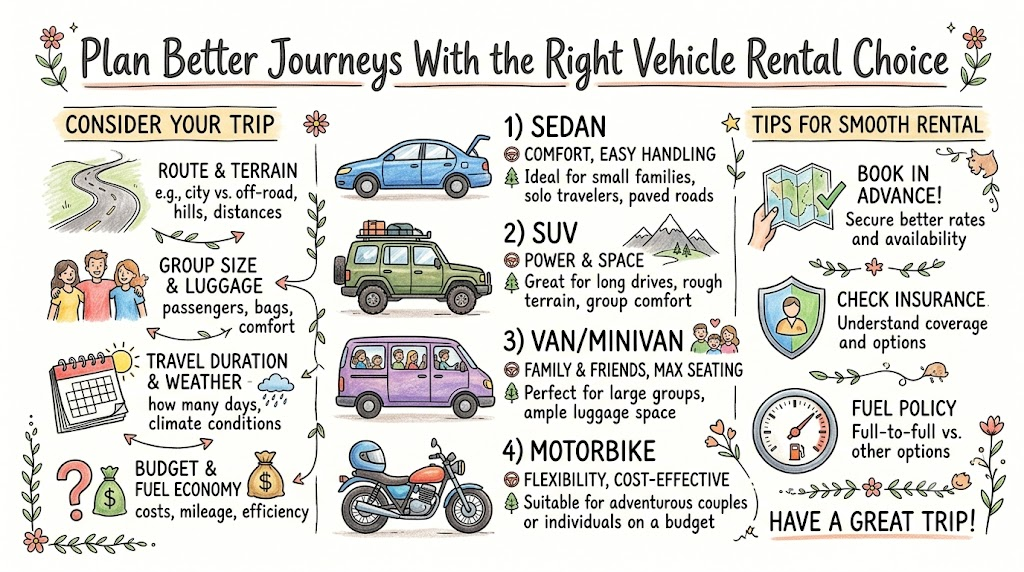
Every journey comes with different transportation needs. A quick trip to the market calls for a different solution than a weekend escape or a family holiday. Choosing the right rental can help you reach your destination comfortably while keeping your travel expenses under control.
Vehicle rentals give travelers access to transport without the long-term commitment of ownership. You can consider a scooter for local errands, a motorcycle for suitable road trips, or a car for journeys with family and luggage. However, each option comes with different costs, requirements, and responsibilities.
Before making a booking, think about your route, travel dates, budget, and driving experience. This guide explores how to plan a rental, compare vehicle options, understand rental agreements, and prepare for unexpected situations. These practical tips can help commuters, students, tourists, and families make better transportation decisions.
1. Build Your Travel Plan Before Choosing a Vehicle
Many rental problems begin when travelers choose a vehicle before understanding their journey. Start by listing your destinations and estimating how much travel you expect each day.
For example, someone visiting a city for business may need transport for several short trips. A tourist visiting several attractions may need greater flexibility. A family traveling between cities may value passenger comfort and luggage space more than easy parking.
Create a simple travel plan that covers:
- Your starting point and destinations
- Approximate daily travel distance
- Number of passengers
- Luggage and storage needs
- Expected rental period
- Available parking at your destinations
- Your total transportation budget
This information helps you compare suitable vehicles instead of browsing options without a clear purpose.
Also consider alternatives. Public transport may work well for a central city trip, while a rental may offer more flexibility for destinations outside regular routes.
2. Choose a Vehicle for Comfort, Convenience, and Cost
The cheapest vehicle may not suit every journey. Consider how each option fits your plans.
Scooters for Short Local Trips
Scooters can suit errands, short commutes, and sightseeing in areas with suitable roads. Their compact size may help with parking in busy locations.
However, riders still need the correct licence, suitable riding skills, and proper safety equipment. Check the scooter’s condition and your comfort with local traffic before departure.
Motorcycles for Longer Routes
Motorcycles may suit experienced riders who want to explore beyond a city center. They can offer flexibility on suitable roads, particularly when travelers carry limited luggage.
Consider the motorcycle’s weight, engine size, fuel use, and riding position. Avoid choosing a powerful model simply because it looks attractive. Select one that matches your skills and the route.
Cars for Family and Group Travel
Cars can provide more passenger space, weather protection, and luggage capacity. They may suit family holidays, business travel, and journeys that involve several stops.
Before choosing a car, check its seating capacity, luggage space, fuel costs, parking needs, and mileage allowance. Make sure the vehicle fits the road conditions and your driving experience.
Bicycles for Leisure and Short Distances
Bicycles can suit relaxed rides and short journeys in places with suitable cycling routes. They do not require fuel, although rental fees and other conditions may still apply.
Inspect the brakes, tyres, chain, and gears. Choose routes that match your fitness and cycling skills.
3. Use This Comparison to Narrow Your Choices
The following table highlights important differences between common rental options.
| Feature | Scooter | Motorcycle | Car | Bicycle |
|---|---|---|---|---|
| Typical use | Local trips | City travel and suitable longer rides | Family trips and group travel | Leisure and short journeys |
| Passenger capacity | Usually limited | Usually limited | Greater capacity | Generally one rider |
| Luggage space | Limited | Limited | More flexible | Limited |
| Fuel needs | Usually petrol or another specified fuel | Usually petrol or another specified fuel | Depends on the vehicle | No fuel |
| Parking needs | Often less space than a car | Often less space than a car | Usually more space | Depends on local facilities |
| Main safety concern | Traffic exposure | Riding skills and road conditions | Vehicle control and road awareness | Road and cycling conditions |
Actual vehicle features vary by model. Check the specific rental details rather than relying only on general comparisons.
4. Estimate the Cost of Your Entire Trip
A sensible rental budget includes more than the booking price. Consider the expenses you may face from pickup until return.
Main Expenses to Review
Rental charges: Check whether the provider charges by the hour, day, or another period. Confirm the total amount for your intended dates.
Fuel: Estimate how much fuel your planned route may require. Check the provider’s fuel policy before departure.
Security deposit: Confirm the amount, payment method, refund conditions, and possible deductions.
Mileage: Review the distance included in the agreement. Ask about charges for additional kilometres.
Insurance: Check what the policy covers, what it excludes, and whether you must pay an excess after damage.
Late returns: Understand the deadline and any charges for returning the vehicle late.
Additional services: Ask about applicable taxes, cleaning, delivery, or other fees.
Example of Trip Budget Planning
Imagine you plan to rent a scooter for a weekend. Instead of looking only at the rental rate, estimate the main expenses in advance.
| Budget item | Planning question |
|---|---|
| Rental fee | What is the total price for the full period? |
| Fuel | How much might your planned route require? |
| Deposit | How much money must you provide upfront? |
| Mileage | Does the included distance cover your journey? |
| Insurance | What coverage and excess terms apply? |
| Other charges | Are any extra fees applicable? |
This table provides a planning framework, not actual market prices. Your final expenses will depend on the vehicle, destination, travel dates, and provider’s terms.
Compare offers for the same rental period and similar travel distance. A lower advertised rate may not offer better value if it includes fewer kilometres or additional charges.
5. Check the Rental Agreement Before Paying
The rental agreement explains your responsibilities and the provider’s conditions. Read it carefully before confirming your booking.
Pay particular attention to the following points:
- Rental period: Confirm the start and end times.
- Pickup and return: Check both locations and the accepted return procedure.
- Payment: Understand the payment schedule and any extra charges.
- Cancellation: Review the refund policy if you change your plans.
- Extensions: Confirm how to request additional rental time.
- Mileage: Check the distance allowance and extra-distance fees.
- Travel restrictions: Ask whether the agreement limits where you can drive.
- Breakdowns: Understand how to contact the provider if the vehicle develops a problem.
Keep a copy of the agreement and booking confirmation. These records can help you check the agreed conditions during your trip.
If you expect delays, contact the provider before your return deadline. Do not assume that you can extend the rental without approval.
6. Confirm Your Licence and Identification
A vehicle rental requires more than payment. You must meet the applicable legal requirements and the provider’s eligibility conditions.
Providers commonly request a valid driving licence and identity documents for motor vehicle rentals. Some also set minimum age requirements or ask for previous driving experience.
Check that your licence covers the exact vehicle category. For example, permission to drive a car does not automatically give you permission to ride a motorcycle.
International travelers should verify local licence recognition rules before booking. Some destinations require an International Driving Permit alongside the original licence. Requirements differ, so consult the relevant official transport authority.
Never assume that your licence works in every country. Confirm the rules before you arrange the rental.
7. Protect Yourself With a Pickup Inspection
A careful inspection can help you identify safety issues and record the vehicle’s condition. Take enough time to check the main components before leaving.
What to Inspect
- Tyres: Look for visible damage and signs of low pressure.
- Brakes: Check that they respond properly in a safe area.
- Lights: Test the headlights, indicators, and brake lights.
- Mirrors: Adjust them for a clear view.
- Bodywork: Look for scratches, dents, and broken parts.
- Fuel or battery: Record the starting level.
- Dashboard: Check for warning lights.
- Controls: Familiarize yourself with the horn and essential controls.
Take photographs of existing damage and report it to the provider. Keep a record of any concerns and the provider’s response.
Do not drive a vehicle with a serious safety problem. Ask the provider to resolve the issue before starting your journey.
Motorcycle and scooter riders should wear a properly fitted helmet and follow local safety rules. Car occupants should wear seat belts and use appropriate child safety equipment where required.
8. Plan for Fuel, Distance, and Unexpected Delays
Your rental conditions can affect the route you choose and the amount you spend.
Estimate Your Distance
Map your main destinations before departure. Include detours, sightseeing, accommodation transfers, and other planned stops.
Compare your estimated distance with the rental’s mileage allowance. If you expect to travel farther, ask about suitable alternatives before booking.
Understand Fuel Requirements
Some providers expect you to return a vehicle with the same fuel level as pickup. Others use different policies.
Record the starting level and confirm the return requirements. If you rent an electric vehicle, check its estimated range and charging arrangements.
Allow Extra Time
Traffic, roadworks, weather, and parking can delay your journey. Allow enough time to return the vehicle within the agreed period.
If an unexpected delay occurs, contact the provider as early as possible. Confirm the next steps instead of assuming that the provider will waive late charges.
9. Make Destination-Specific Preparations
Every destination presents different travel conditions. Research the roads and local rules before selecting a vehicle.
City Travel
Busy streets may require extra attention to traffic, parking, and restricted areas. Choose a vehicle you can control comfortably in local conditions.
Coastal Trips
Rain and slippery surfaces can increase riding risks. Check weather conditions and adjust your plans when necessary.
Mountain Journeys
Steep roads and sharp bends demand careful driving. Choose a suitable vehicle and avoid challenging routes if they exceed your experience.
Highway Travel
Longer journeys require careful planning. Consider fuel stops, rest breaks, vehicle condition, and weather.
Before traveling across state or international borders, check whether your agreement permits the journey. Confirm any insurance or documentation restrictions as well.
10. Common Mistakes That Can Disrupt Your Trip
Avoid these mistakes when arranging a vehicle rental.
Booking without checking the full price: Additional charges can increase the total cost. Compare all applicable expenses before paying.
Ignoring the deposit terms: Confirm the amount, refund process, and conditions for deductions.
Choosing an unfamiliar vehicle: Select a model that matches your driving experience and comfort level.
Skipping the condition check: Record existing damage and report safety concerns before leaving.
Overlooking the mileage allowance: Estimate the route and choose terms that suit your travel distance.
Misreading insurance conditions: Understand the coverage, exclusions, and excess payments.
Returning the vehicle late: Plan your return journey and confirm the provider’s deadline.
Ignoring local traffic rules: Review driving regulations, parking restrictions, and permitted travel areas.
A few simple checks can help you avoid unnecessary expenses and make the journey more manageable.
11. Exploring Rental Options Through MotoShare.asia
MotoShare.asia focuses on helping people explore vehicle rental choices for everyday transport and travel. A rental marketplace can provide a starting point for discovering options that fit your intended journey.
First, decide whether you need a scooter, motorcycle, car, or bicycle. Then compare options for your destination and travel dates.
Before making a final decision, confirm the current price, vehicle details, required documents, deposit terms, and return conditions. Vehicle availability and booking arrangements may vary by location and provider.
Treat the search as the first step in your planning process. Review the actual rental agreement before paying and make sure the vehicle suits your travel needs.
Frequently Asked Questions (FAQs)
1. What is the first step when renting a vehicle?
Start by defining your destination, travel distance, rental period, passenger count, and budget. These details will help you identify suitable vehicles and compare rental offers.
2. How do I choose between a scooter and a motorcycle?
Consider your riding experience, route, comfort, and luggage needs. A scooter may suit short local trips, while a motorcycle may suit experienced riders planning longer journeys.
3. What costs should I check before booking?
Review the rental fee, fuel, deposit, mileage allowance, insurance terms, and other applicable charges. Compare the total expected cost instead of relying only on the advertised rate.
4. Can I rent a vehicle without a driving licence?
Motor vehicle rentals generally require a valid licence that covers the chosen vehicle category. Check local laws and provider requirements before booking.
5. Can international tourists rent vehicles in India?
International tourists may qualify if they meet local legal and provider requirements. Check licence recognition rules and whether you need an International Driving Permit before booking.
6. How can I protect my deposit?
Read the refund conditions, inspect the vehicle, photograph existing damage, and follow the rental agreement. Ask the provider about the refund process before paying.
7. What should I do if I find damage at pickup?
Take clear photographs and report the damage to the provider before departure. Ask the provider to document the issue so both parties have a record.
8. Does every rental include insurance?
No. Coverage depends on the provider and rental agreement. Confirm the policy details, exclusions, excess payments, and your responsibilities before accepting the vehicle.
9. Can I use a rental vehicle for an out-of-city trip?
Check the rental agreement first. Some providers may limit mileage or restrict travel areas. Confirm insurance conditions and any state or border restrictions.
10. How should I handle an unexpected return delay?
Contact the provider as soon as possible. Explain the delay and confirm whether an extension is available, along with any additional charges.
11. How can I reduce rental expenses?
Compare total prices, choose a suitable vehicle, estimate your mileage, and review all fees before booking. Follow the fuel, damage reporting, and return requirements in the agreement.
12. What role does MotoShare.asia play in vehicle rental planning?
MotoShare.asia focuses on helping users explore vehicle rental options for different travel needs. Confirm current availability, pricing, booking arrangements, and provider terms before making a decision.
Conclusion
Good rental planning begins with a clear understanding of your journey. Choose a vehicle that suits your destination, passenger needs, driving skills, and budget.
Compare the full cost, read the agreement, prepare your documents, and inspect the vehicle before departure. Check fuel rules, mileage limits, insurance terms, and return conditions so you can plan with confidence.
Most importantly, put safety ahead of convenience. Follow local driving rules, wear the required protective equipment, and adjust your plans to changing road and weather conditions. These habits can help you enjoy a more organized and comfortable journey.
Leave a Reply