Exploring Colombia on Two Wheels: How to Choose a Rental Motorcycle and Travel with Confidence
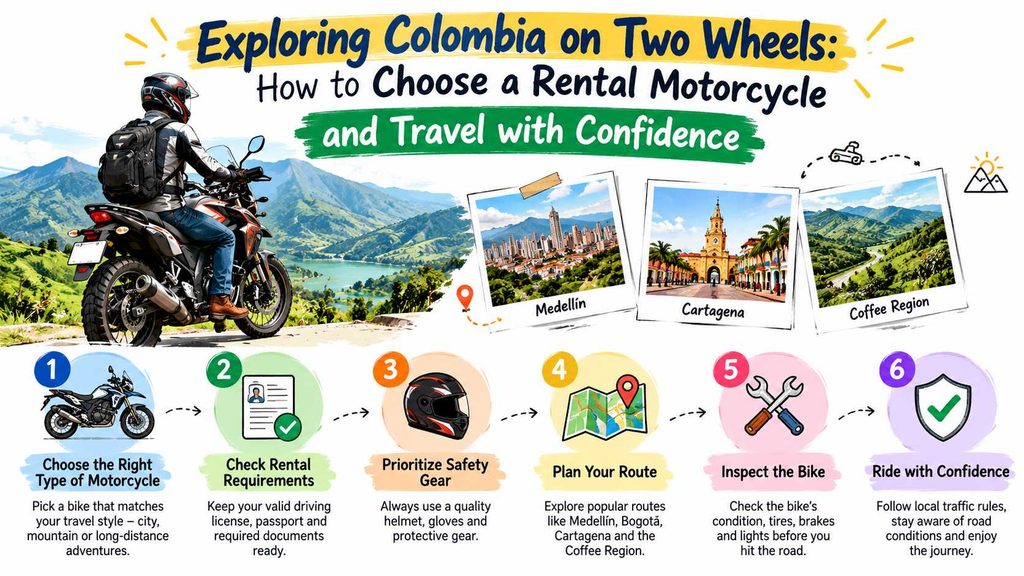
Introduction
Colombia rewards curious travelers with dramatic mountain scenery, lively city neighborhoods, quiet rural roads, and beautiful coastal destinations. Traveling by motorcycle can help experienced riders explore these places on their own schedule. It also creates opportunities to stop at smaller destinations that travelers might otherwise overlook.
Still, motorcycle travel requires thoughtful preparation. Colombian roads can vary from crowded urban streets to steep mountain routes and uneven rural surfaces. The motorcycle you choose, your riding experience, and the terms of your rental agreement can all affect your journey.
Before booking, decide where you want to travel, how much luggage you need, and how comfortable you feel riding in unfamiliar conditions. Compare the complete rental cost and check the applicable licence requirements.
This guide explains how to choose a motorcycle, prepare for different destinations, understand rental expenses, and manage common challenges throughout your trip.
Start with a Clear Travel Plan
Your route should guide your motorcycle selection. Begin by deciding whether you need transportation for local sightseeing, regional exploration, or a longer road trip.
Short Trips Around a City
Urban journeys often involve frequent stops, tight parking spaces, and changing traffic conditions. A manageable commuter motorcycle may suit these trips better than a large touring model.
Think about the places you plan to visit and the distance between them. If your itinerary focuses on central attractions, walking, public transportation, or taxis may also offer practical alternatives.
Journeys Between Towns
Regional travel requires more attention to road conditions, fuel access, and travel time. Some routes include steep climbs, winding sections, and areas with limited services.
Choose a motorcycle that suits the intended roads and the amount of luggage you carry. Ask the rental provider whether the model can handle your proposed itinerary.
Multi-Day Motorcycle Adventures
Longer journeys require a balance between comfort, performance, and operating costs. Seat comfort, luggage capacity, fuel range, and maintenance support become increasingly important.
Plan manageable daily distances and allow time for rest. Avoid building an itinerary that depends on reaching every destination at a precise time.
A flexible schedule helps you respond to rain, traffic, roadworks, or unexpected route changes.
Find the Right Motorcycle for Your Riding Style
A motorcycle should match your abilities and travel needs. A larger engine does not automatically provide a better experience.
Commuter Motorcycles for Everyday Use
Commuter motorcycles often work well for local travel and shorter journeys. Their manageable size can make parking and low-speed maneuvering easier.
They may suit solo travelers carrying limited luggage. However, performance and comfort vary between models.
Before booking, check the seat height, braking performance, carrying capacity, and suitability for hills. Ask whether the motorcycle can handle the distance and road conditions you expect.
Scooters for Convenient Local Travel
Scooters can simplify certain urban journeys, particularly when they use automatic transmission. They may suit travelers who want straightforward transportation between nearby destinations.
However, automatic transmission does not eliminate the need for proper riding skills. Riders still need to manage balance, braking, traffic, and unexpected road hazards.
Check the scooter’s engine capacity, storage, passenger limits, and road suitability. Confirm your licence eligibility before renting one.
Touring Motorcycles for Longer Distances
Touring motorcycles often emphasize comfort and luggage capacity. These features can help experienced riders cover longer distances.
However, larger motorcycles may feel difficult to handle in tight spaces or during slow maneuvers. Their rental and fuel costs may also exceed those of smaller bikes.
Choose a touring motorcycle only if you can control its weight comfortably and confidently.
Adventure Motorcycles for Varied Terrain
Adventure motorcycles may suit experienced riders who plan to travel across different road surfaces. Depending on the model, they may offer higher ground clearance, upright seating, and luggage mounting options.
These features do not guarantee suitability for every rural road. Tire condition, suspension, weight, and rider skill all influence performance.
Describe your route to the provider and confirm whether the rental agreement permits unpaved roads. Never assume that an adventure motorcycle can safely handle every trail.
Understand the Differences Between Colombian Destinations
Colombia’s geography creates different riding conditions across its major destinations. Consider the local environment before selecting a vehicle.
Medellín and the Surrounding Mountains
Medellín sits in a mountainous region, and nearby roads can include steep gradients and winding sections. Traffic and changing weather can also affect journey times.
For city travel, focus on handling, braking, and comfort. If you plan to visit surrounding towns, check the motorcycle’s performance on longer routes.
Give yourself extra time for elevation changes and traffic. Avoid attempting a demanding mountain journey immediately after collecting an unfamiliar bike.
Bogotá and Urban Traffic
Bogotá presents challenges for riders who are unfamiliar with its traffic patterns and road layout. Its high-altitude setting can also affect some visitors’ comfort during physical activity.
Choose a motorcycle you can maneuver confidently. Check the brakes, mirrors, lights, and tires before entering busy streets.
If your itinerary focuses on central attractions, compare motorcycle rental with other transport options. A rental may not provide enough additional convenience to justify its cost for every traveler.
Cartagena and the Caribbean Coast
Cartagena offers historic neighborhoods, urban attractions, and access to coastal destinations. A motorcycle or scooter may suit certain local journeys, depending on traffic and parking conditions.
Heat and humidity can increase fatigue. Rain can reduce visibility and make road surfaces slippery.
Carry water, wear appropriate protective clothing, and take regular breaks. If you plan to leave the city, check the route and confirm that your rental agreement permits the journey.
Compare Rental Prices and Additional Expenses
The advertised daily rate rarely tells the whole story. Deposits, insurance, mileage restrictions, and equipment charges can affect the total amount you pay.
Before confirming your rental, request a written quote and review these items.
| Expense | Details to verify |
|---|---|
| Rental rate | Total price for your chosen dates |
| Security deposit | Amount, payment method, and refund conditions |
| Insurance | Coverage, exclusions, and deductibles |
| Mileage | Included distance and extra-distance charges |
| Fuel | Collection and return requirements |
| Protective gear | Included equipment and additional fees |
| Delivery | Collection or delivery charges |
| Late return | Grace period and possible penalties |
| Damage | Inspection procedure and financial responsibility |
| Cancellation | Refund terms and booking changes |
Compare the total cost rather than choosing the lowest daily price. A cheaper rental may include mileage restrictions or fewer services.
Estimate fuel and parking costs separately. Include accommodation, equipment, and a reserve for unexpected expenses.
If you need a motorcycle for several days, ask whether the provider offers a longer-term rate. Check the cancellation policy before committing to the booking.
Check Your Licence and Rental Eligibility
International visitors should confirm their eligibility before arranging a motorcycle rental. Requirements can depend on nationality, residency, licence category, motorcycle type, and current Colombian regulations.
Do not assume that a standard car licence authorizes you to ride a motorcycle. Rental providers may also set their own minimum age or riding-experience requirements.
Before paying, confirm:
- Whether your licence covers the intended motorcycle.
- Whether you need an international driving permit or supporting documents.
- Which identification documents the provider accepts.
- Whether age or experience restrictions apply.
- Which payment methods the provider accepts for the deposit.
- Whether your insurance covers motorcycle riding in Colombia.
Ask the provider to explain its requirements in writing. If you remain uncertain about a legal requirement, check with the relevant Colombian authority.
Keep your documents secure and carry the items required for your journey.
Inspect the Motorcycle Before You Leave
A careful inspection can help you identify visible problems and avoid disagreements about existing damage.
Complete these checks before departure:
- Tires: Look for cuts, unusual wear, and visible damage.
- Brakes: Confirm that both brakes respond normally.
- Lights: Test the headlight, indicators, and brake light.
- Mirrors: Adjust them to provide a clear view of surrounding traffic.
- Controls: Check the throttle, horn, switches, and clutch if fitted.
- Visible components: Look for fluid leaks and obvious mechanical problems.
- Bodywork: Photograph scratches, dents, and broken parts.
- Equipment: Confirm that you receive the agreed helmet, keys, and accessories.
- Documents: Keep a copy of the rental agreement and inspection record.
Ask the provider to document existing damage. Keep your photographs until the rental ends and the return inspection is complete.
If you find a serious mechanical issue, do not ride the motorcycle. Request a repair or suitable replacement.
Understand Insurance and Security Deposits
Insurance conditions can affect your financial responsibility after an accident, theft, or damage claim.
Ask whether the rental includes protection for vehicle damage, theft, third-party liability, and roadside assistance. Confirm the exclusions and deductible for each relevant benefit.
Some rental agreements restrict travel outside approved areas or on unpaved roads. Others may limit who can operate the motorcycle.
Read the written terms before collecting the vehicle. Do not rely on verbal promises that conflict with the agreement.
Your personal travel insurance may also exclude motorcycle riding under certain circumstances. Contact your insurer to confirm whether your policy covers your licence category, motorcycle type, and planned activity.
Save the provider’s emergency contact details. Ask how to report a breakdown and whether roadside recovery or replacement transportation could involve extra charges.
Prepare for Weather and Road Changes
Good preparation helps you respond to the conditions you may encounter across Colombia.
Check the Weather Along Your Route
Conditions can vary between coastal destinations and higher elevations. Review forecasts for the areas you intend to visit rather than relying only on the weather in your starting city.
Carry suitable rain protection and clothing for expected temperature changes. Reduce your speed when rain affects visibility or traction.
Avoid sudden braking and sharp turns on wet roads. If conditions become dangerous, stop somewhere safe and reconsider your travel plans.
Plan Fuel Stops Before Leaving Towns
Fuel stations may become less frequent outside major urban areas. Identify possible refueling points before entering remote stretches.
Refuel early when you cannot confirm the next station’s availability. Carry drinking water and allow time for regular breaks.
Prepare for Limited Mobile Coverage
Save important contact details and consider offline navigation. Keep your phone charged and share your planned route with someone you trust.
For remote journeys, identify possible stopping points and ways to seek assistance. Do not continue along an unfamiliar route if conditions exceed your experience or the motorcycle’s capabilities.
Pack Suitable Protective Equipment
Wear a properly fitting helmet that meets applicable requirements. Gloves, sturdy footwear, and protective clothing can help reduce exposure to riding hazards.
Check that the rental provider supplies suitable equipment. Secure your luggage and follow the motorcycle’s weight and passenger limits.
Common Mistakes That Can Affect Your Trip
Small oversights can lead to unexpected expenses, delays, or uncomfortable riding conditions.
Choosing a Motorcycle Without Considering the Route
A bike that suits city travel may not work well for a long mountain journey. Select your route first and choose a vehicle that fits the conditions.
Ignoring the Full Rental Price
The daily rate may exclude mileage, equipment, or certain insurance options. Review every charge before confirming the booking.
Overestimating Your Riding Ability
Unfamiliar traffic and winding roads can demand more attention than expected. Begin with manageable journeys and avoid routes that exceed your skills.
Failing to Record Existing Damage
Photograph the motorcycle and request a written inspection record before departure. Keep the evidence until the provider completes the return inspection.
Riding Without Enough Rest
Long hours can reduce concentration and reaction time. Schedule breaks and adjust your itinerary when fatigue develops.
Overlooking Return Conditions
Late returns, fuel differences, and missing equipment can create additional charges. Check the return procedure and leave enough time to complete it.
Important Considerations Before Booking
Before confirming a motorcycle rental, make sure your route, vehicle, and budget align.
First, verify your legal eligibility and select a motorcycle that suits your riding ability. Next, compare the total rental price and review the deposit, insurance, mileage, fuel, and cancellation conditions.
Check the provider’s breakdown procedures and support arrangements. You should know whom to contact and what steps to follow if the motorcycle becomes damaged or unusable.
Consider whether you need a motorcycle throughout your stay. Public transportation, taxis, or a rental car may work better for some destinations or travel groups.
If you want to research rental possibilities, visit MotoShare.co and confirm the current listings, provider requirements, and booking conditions before making a commitment.
Frequently Asked Questions (FAQs)
1. What should I consider when renting a motorcycle in Colombia?
Start with your itinerary, riding experience, licence eligibility, and budget. Choose a motorcycle that suits your route and review the complete rental agreement.
2. Which motorcycle works best for city sightseeing?
A manageable commuter motorcycle or suitable scooter may fit short urban journeys. Consider traffic, parking, road conditions, and your experience.
3. Can international tourists rent motorcycles in Colombia?
Some visitors may qualify, depending on current regulations, licence categories, and provider policies. Confirm the necessary documents before booking.
4. Does a standard car licence allow motorcycle riding?
Do not assume that it does. Check the applicable licence category and supporting-document requirements with the relevant authority.
5. What expenses should I include in my rental budget?
Include the rental fee, deposit, insurance, fuel, mileage, protective equipment, parking, and possible additional charges.
6. How do I compare motorcycle rental insurance?
Review damage coverage, theft protection, third-party liability, deductibles, exclusions, and roadside assistance. Confirm the terms in writing.
7. Can I use a rental motorcycle for a multi-day journey?
That depends on the motorcycle’s suitability, the rental agreement, mileage allowance, and permitted travel areas. Confirm these conditions before departure.
8. What should I do if the motorcycle has visible damage?
Photograph the damage and ask the provider to record it in the inspection report. Keep the record until the rental ends.
9. How should I prepare for rainy roads?
Carry suitable rain protection, reduce your speed, and increase your following distance. Stop somewhere safe if visibility or traction becomes inadequate.
10. Are adventure motorcycles suitable for every rural road?
No. Suitability depends on the motorcycle’s specifications, tires, road conditions, weather, and rider experience. Confirm your route with the provider.
11. What happens if the rental motorcycle breaks down?
Contact the provider and follow the agreed breakdown procedure. Ask in advance whether recovery or replacement transport involves additional costs.
12. Should I rent a motorcycle for my entire visit?
Not necessarily. Compare your itinerary, riding needs, parking arrangements, and total cost with alternative transportation options.
Conclusion
A rewarding motorcycle trip through Colombia begins with realistic planning and a suitable vehicle. Your riding experience, intended route, budget, and legal eligibility should guide the rental decision.
Compare the complete price, review insurance terms, and inspect the motorcycle before leaving. Plan fuel stops, allow enough time for rest, and adjust your schedule when weather or road conditions change.
For your next step, explore rental possibilities through MotoShare.co and confirm the provider’s current terms before booking. Careful preparation will help you make a more informed choice and approach your Colombian journey with confidence.
Leave a Reply