How to Compare Mobile SIM and eSIM Plans Across Different Countries
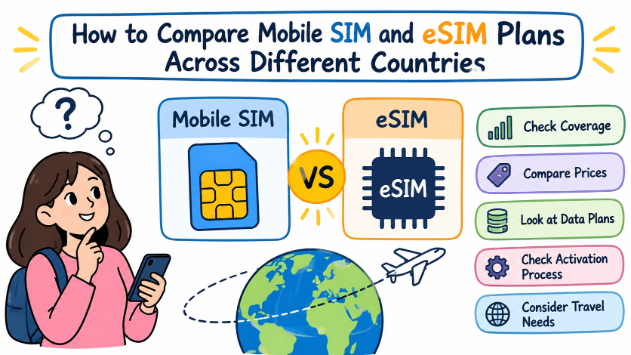
Introduction
A mobile connection is important for work, study, travel, and everyday communication. However, finding the right mobile plan is not always simple. Providers offer different packages, prices, data limits, and network services.
Some customers need large data allowances for video streaming. Others want affordable calls, basic internet access, or flexible prepaid services. International travellers may also need a plan that works across different locations.
Comparing advertised prices alone can lead to poor choices. A cheaper package may have less data, shorter validity, or limited network access. A slightly more expensive option may offer better value.
You should compare the complete package before making a decision. Look at data, calls, coverage, 5G access, hotspot limits, and renewal conditions.
It is also important to check when providers last updated their information. This helps you avoid outdated prices and expired offers.
Independent comparison platforms such as RankeSIM help users understand available mobile options through organized plan details and verification information.
Important Details to Review Before Buying a Mobile Plan
Every mobile user has different requirements. A suitable package should support your regular activities without unnecessary costs.
Consider these important comparison points.
1. Total plan cost
Check the complete amount you must pay. Include monthly fees, activation charges, taxes, and other applicable costs. Compare promotional prices with regular renewal prices.
2. Internet data
Estimate your monthly usage before choosing an allowance. Messaging requires little data, while streaming and video meetings need much more.
3. Calls and messages
Check whether local calls, international calls, and text messages come with the package. Some plans charge separately for certain services.
4. Validity period
Prepaid packages may last for a few days or several months. Check the expiry date and recharge conditions.
5. Network availability
Review coverage around your home, office, university, and regular travel locations. A low-cost package offers little value without reliable service.
6. Network speed
Check whether the package supports 4G or 5G. Actual performance depends on the provider, device, and local network conditions.
7. Hotspot access
People who connect laptops and tablets through mobile data should check tethering rules. Some providers apply separate hotspot allowances.
8. Device compatibility
Confirm whether your phone supports the required SIM format and network technology.
9. Renewal and cancellation
Understand automatic renewals, contract periods, cancellation rules, and unused data conditions.
These details help you compare the real value of different mobile packages.
Understanding Different Types of Mobile Plans
Before comparing providers, learn how common mobile packages work. Each type offers different payment methods and service conditions.
SIM-only plans
A SIM-only package provides mobile services without a new handset. You use your existing phone and pay for the selected mobile package.
This option suits people who already own a compatible device.
Prepaid plans
Prepaid customers purchase mobile credit or a package before using the service. They can control spending and avoid some long-term commitments.
Students and occasional mobile users often prefer this payment method.
Postpaid plans
Postpaid customers pay their bills after using mobile services. Providers usually charge a regular monthly amount.
This option suits customers who prefer predictable monthly billing.
Data-only packages
These packages focus on internet connectivity. They work well with tablets, portable routers, and other connected devices.
Bundled packages
Bundled plans combine services such as internet data, calls, and texts. Some providers also include international calling features.
Pay-as-you-go services
These services charge according to usage or purchased credit. They suit people who do not need a regular monthly package.
eSIM packages
An eSIM uses a digital profile instead of a removable SIM card. Compatible devices can download and activate supported mobile profiles.
Always review the provider’s terms because features differ between markets.
SIM vs eSIM Plans: Understanding the Main Differences
Choosing between a physical SIM and an eSIM depends on your phone and personal requirements.
A physical SIM is a removable card. You insert it into your phone to access mobile services.
An eSIM is built into compatible devices. It stores mobile network profiles digitally.
Here are some important differences:
- Installation: Physical SIMs require card insertion. eSIMs use a supported digital activation process.
- Compatibility: Physical SIM support is common, while eSIM support depends on the device.
- Changing providers: Both formats support provider changes, but activation steps may differ.
- Multiple profiles: Some devices allow users to store several eSIM profiles.
- Travel convenience: eSIMs can help travellers add another supported mobile package without changing physical cards.
An eSIM may be convenient for frequent travellers. However, a physical SIM can be more practical for people with older phones.
Before choosing, check your device specifications and the provider’s activation requirements.
How to Compare SIM-Only Deals in the UK
The UK market offers several mobile package types. Customers should compare contract terms, data allowances, and network features before selecting a provider.
If you want to compare SIM only deals UK, start with your monthly budget and typical data usage.
Next, examine the available package features:
- Monthly price and contract duration.
- Included data and call allowances.
- 4G and 5G access.
- Network coverage in your area.
- Hotspot and tethering restrictions.
- Roaming conditions.
- Price changes after promotional periods.
People who use large amounts of internet data may consider unlimited data SIM only deals UK. However, unlimited does not always mean unrestricted.
Some packages include fair-use rules, speed limits, or specific tethering conditions. Read the complete terms before purchasing.
Customers who want payment flexibility can also explore pay as you go SIM deals UK. These packages allow users to purchase credit or services when required.
Compare the total cost and flexibility instead of choosing only the lowest advertised price.
Comparing Prepaid and 5G Mobile Plans in the USA
American mobile customers can choose from prepaid and postpaid packages. Their features depend on the provider and selected plan.
When you compare prepaid phone plans USA, examine the included data, renewal period, and network coverage.
Some packages provide fixed high-speed data. Others offer unlimited data with certain speed conditions.
People interested in 5G should compare 5G mobile plans USA using these factors:
- Monthly or recharge costs.
- High-speed data allowances.
- Hotspot availability.
- 5G network access.
- Local coverage.
- International calling options.
- Additional taxes and charges.
Remember that not every prepaid package supports 5G. Your device must also support the provider’s network bands.
Check coverage in your regular locations before selecting a package. Network availability can differ between cities and rural areas.
Choosing Suitable Mobile and eSIM Plans in Australia
Australian customers should compare mobile packages according to their location, data usage, and preferred payment method.
When you compare mobile plans Australia, review the available network options and package conditions.
Important factors include data allowances, recharge validity, calls, texts, and hotspot access.
Customers searching for prepaid eSIM plans Australia should confirm that their chosen provider supports eSIM activation for that particular package.
Also, check:
- Network coverage in your area.
- 4G and 5G availability.
- Recharge costs.
- Included calls and messages.
- Data expiry conditions.
- eSIM device compatibility.
International students may prefer prepaid plans with flexible validity. Remote workers may need larger data allowances and reliable hotspot access.
Travellers should also review roaming conditions before leaving Australia.
What to Check When Comparing Prepaid SIM Plans in Germany
Germany offers prepaid mobile options for residents, students, and international visitors.
People researching prepaid SIM plans Germany should first compare data allowances and recharge prices.
Next, review package validity and network coverage. Check service availability near your accommodation, workplace, or university.
Other important considerations include:
Identity verification: Prepaid activation may require identity checks. Review the provider’s current documents and verification process.
Data conditions: Check the included allowance, speed limits, and expiry rules.
Recharge options: Understand how to add credit and renew your package.
Roaming: Review international usage conditions, especially when travelling within Europe.
Provider requirements can change. Always check current terms before buying a German prepaid SIM.
How to Compare Mobile Phone Plans in Canada
Canadian customers should consider coverage, monthly costs, and included services when selecting a mobile package.
People who compare mobile phone plans Canada should begin by checking their usual mobile data usage.
Then, examine these features:
- Monthly prices and data allowances.
- Local calling and texting.
- 4G and 5G access.
- Network coverage.
- International roaming.
- Hotspot restrictions.
- Contract and cancellation conditions.
Canada has different coverage conditions across cities, smaller communities, and remote areas.
A plan that suits someone in a large city may not provide the same experience elsewhere.
Check the provider’s coverage information for your location before making a final decision.
Why Network Performance and Plan Value Are Different
A mobile network can offer strong coverage without providing the most suitable package.
Understanding MNOs and MVNOs helps explain this difference.
A Mobile Network Operator (MNO) owns and operates its network infrastructure. A Mobile Virtual Network Operator (MVNO) provides services through another operator’s network.
MVNOs may offer different prices, package sizes, and payment options. However, their network access and service conditions can vary.
Compare the following details:
- Local network coverage.
- Available connection speeds.
- Data restrictions.
- Customer usage requirements.
- Package prices.
- Additional service conditions.
A more expensive package does not automatically provide better value. Choose a service that meets your actual connectivity needs.
Why Accurate and Recently Checked Plan Information Matters
Mobile providers regularly update their packages. Prices, data allowances, promotions, and service restrictions can change.
An older comparison may contain information that no longer matches the provider’s current offer.
Before trusting a comparison, look for these details:
- Official-source references: Check where the plan information comes from.
- Verification status: Understand whether the details have been reviewed.
- Last-checked dates: See when someone last checked the information.
- Ageing information warnings: Identify details that may need another review.
- Unknown information: Recognize features that have not been confirmed.
RankeSIM focuses on making these details easier to understand. Its evidence-focused approach helps users review available sources and verification information.
Missing details should not appear as confirmed facts. Clear information about uncertainty helps users make more informed choices.
How RankeSIM Makes Mobile Plan Comparisons Easier
Finding suitable mobile packages across several countries can take time. RankeSIM helps simplify this research through an independent SIM and eSIM comparison platform.
Its interactive comparison tool organizes available plan information. Users can explore different package types and evaluate their suitability.
Important platform features include:
Personalized plan-fit scores: These scores help users understand how closely available plans match their selected requirements.
Effective cost comparisons: Review plan prices alongside their allowances and validity periods.
Data allowances: Compare included internet data across different packages.
Network information: Examine available provider details and 5G information.
Hotspot conditions: Review available tethering information and restrictions.
SIM formats: Check whether listed plans support physical SIM cards or eSIMs.
Provider pages: Explore information about MNOs and MVNOs.
Verification details: Review source references, information status, and last-checked dates.
RankeSIM has published comparison snapshots covering:
- United Kingdom: 68 plans.
- Australia: 35 plans.
- United States: 29 plans.
- Germany: 27 plans.
These numbers describe published comparison snapshots. They are not permanent or guaranteed live totals.
The platform identifies nine active markets: Australia, Canada, France, Germany, India, Ireland, New Zealand, the United Kingdom, and the United States.
Its separate travel eSIM comparison mode is still being introduced. Therefore, users should not treat it as a fully established travel comparison service.
Overall, RankeSIM brings important mobile plan details together and helps readers evaluate available information more clearly.
Your Final Checklist Before Selecting a Mobile Plan
A little research can help you avoid unsuitable mobile packages. Review these questions before switching providers or purchasing a new SIM.
- How much data do I normally use?
- Will a fixed data package meet my needs?
- Do I need unlimited internet access?
- Is 5G available in my area?
- Does the provider offer reliable local coverage?
- Is my phone compatible with the SIM format?
- Are calls and texts included?
- Can I share data through a hotspot?
- How long does the package remain active?
- Are there automatic renewal conditions?
- Have someone recently checked the listed details?
- Are additional charges or restrictions clearly explained?
Compare your answers with the available offers. Your location, device, budget, and usage should guide your final decision.
Frequently Asked Questions
1. What is the difference between SIM-only and prepaid plans?
SIM-only describes a mobile package that does not include a handset. Prepaid describes a payment method where customers pay before using services. A SIM-only package can be prepaid or billed monthly, depending on the provider.
2. How can I compare mobile plans from different providers?
Review monthly costs, data allowances, calls, texts, coverage, and validity. Also, check 5G access, hotspot restrictions, and renewal conditions. Use recently checked information and confirm important details through the provider’s official terms.
3. Is an eSIM better than a physical SIM?
An eSIM offers digital activation and convenient profile management on compatible devices. A physical SIM works with many phones and can be transferred between compatible devices. Neither option is always better. Your phone and usage requirements determine the right choice.
4. How do I find affordable SIM-only deals in the UK?
Compare contract lengths, monthly costs, data allowances, and network coverage. Review regular prices instead of relying only on promotional offers. Also, check fair-use conditions, roaming rules, and pay-as-you-go alternatives.
5. Are unlimited data SIM plans truly unlimited?
Some providers apply fair-use policies, speed restrictions, or hotspot limits. Others may have specific conditions for high-volume usage. Read the complete package terms to understand what unlimited data means for that particular plan.
6. Can prepaid plans support 5G?
Yes, selected prepaid packages support 5G connectivity. However, the provider, device, package, and local network coverage must support it. Check these requirements before purchasing because 5G does not come with every prepaid plan.
7. How do I choose a prepaid eSIM plan in Australia?
Compare data allowances, recharge validity, prices, network coverage, and included calls. Confirm that your smartphone supports eSIM and that the provider offers digital activation for your chosen package.
8. What is the difference between an MNO and an MVNO?
An MNO owns and operates mobile network infrastructure. An MVNO offers mobile services through another operator’s network. Their prices, package features, and service conditions may differ.
9. Why should I check mobile plan information before buying?
Providers can change prices, data allowances, promotions, and restrictions. Outdated comparison information may cause confusion. Check official sources, verification details, and last-checked dates before making your purchase.
10. How does RankeSIM help users compare SIM and eSIM plans?
RankeSIM organizes available mobile plan information across supported countries. Its interactive tool helps users review costs, data, validity, network features, SIM formats, and provider details. Verification information and plan-fit scores offer additional comparison context.
Final Thoughts
Choosing a suitable mobile package requires careful research. The lowest price may not provide the features you need.
Look beyond advertised offers. Compare data allowances, network coverage, validity periods, calls, texts, 5G access, and device compatibility.
Also, review hotspot restrictions, roaming conditions, and renewal rules. These details can affect your experience and total spending.
Mobile requirements vary across countries and users. A student may need an affordable prepaid package, while a remote worker may need more data and reliable connectivity.
RankeSIM helps make this research more manageable through country-specific comparisons, plan-fit scores, and visible verification details.
Take time to understand each offer, check current provider conditions, and select a mobile plan that supports your everyday needs
Leave a Reply